

Editorial pickCoolbet4.1/5
Reviewed by our editors
100% up to €300 + free spins
Min. deposit 30Wagering 30x
View offer
Affiliate link · 21+
An identity document, proof of address and ownership of the payment method. In what order they are requested and what you can do in advance.
Reviewed by our editors
100% up to €300 + free spins
Affiliate link · 21+
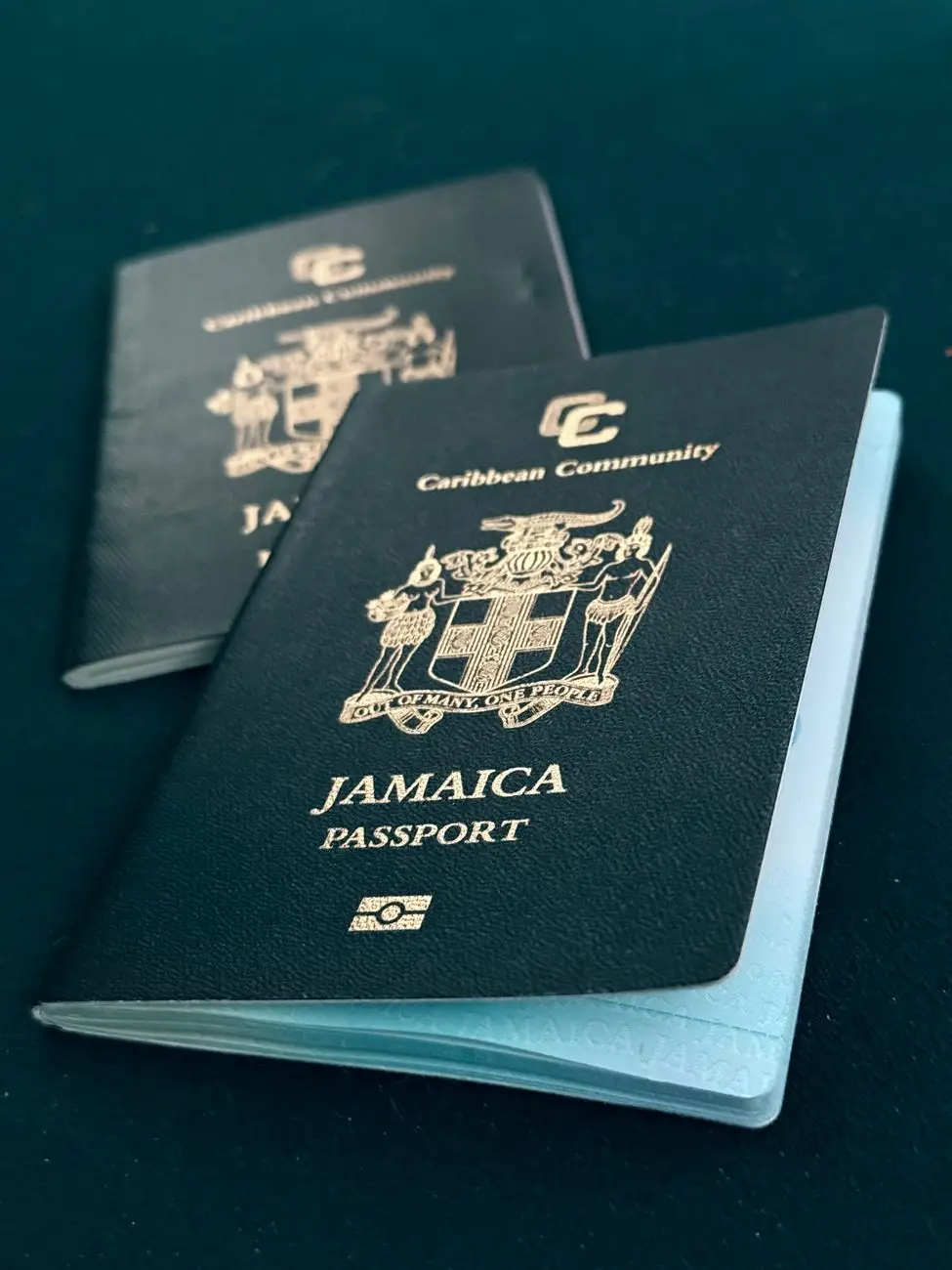
KYC, or “know your customer”, is not a casino invention. It comes from anti-money laundering and counter-terrorist financing requirements, supervised in Estonia by the Financial Intelligence Unit, and it applies to all licensed service providers. The casino has to be satisfied of three things: who you are, where you live and whether the payment method belongs to you.
In practice this means the check is triggered either at registration or, at the latest, with your first withdrawal request. If it is only triggered at the moment of the request, the checking time is added directly to the withdrawal time — this is the most common reason why the first withdrawal takes longer than all the following ones.
| Document | What it proves | What is accepted |
|---|---|---|
| Identity document | Who you are | ID card, passport or driving licence; all corners in frame, valid expiry date |
| Proof of address | Where you live | Utility bill or bank statement, usually up to 3 months old, name and address visible |
| Ownership of the payment method | Whether the account belongs to you | Bank statement header or front of the card, showing your name and the last digits |
At casinos with bank identification — those where the account is created via bank link — the first two steps are essentially already done: the bank has identified you and the data passes to the casino. That is exactly why the first withdrawal at Pay N Play casinos is usually much faster.
If your request has already come back, the list of reasons and the next step for each is in a separate article.
Automatic document recognition gives an answer within minutes. Manual review happens during working hours and usually takes hours, less often up to a couple of business days. If the casino asks for an additional document mid-process, the waiting time starts again.
That is why it makes sense to look at a casino's withdrawal time frame together with its KYC practice, not separately: a promise of fast withdrawals does not apply until the account is verified.
The same topic from a bank payment perspective is covered by KYC and identity verification on our sister site; the definition of the term itself is in the glossary.
KYC is not one check but a tiered system. Most players only see the first level and are surprised when the second is triggered.
Level 1 — basic identification. Identity document and address. Triggered on account opening or at the first withdrawal. At a bank-link casino it is often already done, because the bank identified you.
Level 2 — ownership of the payment method. The casino checks that the payment method belongs to you: a bank account statement in your name, the front and back of the card with the numbers partly covered, a screenshot of the e-wallet account. Usually triggered at the first withdrawal or when changing payment method.
Level 3 — source of funds. The hardest step, and there is a separate section on it below. Triggered when an amount threshold is crossed, on an unusual pattern or during a periodic review.
What moves the thresholds. Cumulative deposits over a certain period, a single large withdrawal, rapid consecutive transactions, changing payment methods, a change of device or country. None of these means you are suspected — they are rulebook triggers that apply automatically.
The practical conclusion: levels 1 and 2 can be done before they are asked for. Level 3 cannot, because it cannot be submitted in advance — but you can prepare for it by keeping the documents to hand.
If a withdrawal has been stuck for weeks, the reason is usually here. Source of funds is a question most people cannot answer, because nobody has asked it before.
What is asked for. A document showing where the money you played with came from. Typically: a salary certificate or payslips, a bank account statement covering 3–6 months, a sale agreement in the case of an asset sale, a dividend notice, a certificate of inheritance. A screenshot from a banking app is usually not good enough — you need an official statement with the bank's details.
Why it is asked for. Anti-money laundering rules oblige the operator to understand the origin of a customer's funds when amounts exceed a certain level. It is not an accusation, and it applies at every financial institution, including the bank itself.
Why it takes so long. The documents are reviewed by the compliance team, not customer support, and their queue is separate and slower. An incomplete submission starts the cycle over: if you send one month out of three, the other two will be requested separately.
How to speed it up. Send everything at once and in full: the whole period, all pages, a PDF straight from online banking, not a screenshot. Add a one-line explanation linking the document to your account (“salary income, monthly average X, the same account I made deposits from”). That one sentence prevents most follow-up requests.
If you cannot prove it. The withdrawal may stay on hold indefinitely. That is exactly why, for larger amounts, it is worth knowing you have the documents before, not after.
Most rejections are not about the content of the document but about its file. All eight are preventable.
One trick that saves a whole cycle: look at the file full-screen before uploading. If you cannot read it yourself, neither can the reviewer.
There is one category in the Estonian market where this entire section barely exists, and that is the casino with bank identification.
When you log in via Swedbank, SEB, LHV or Luminor, the bank has already identified you, and that identification carries over to the casino. Level 1 is essentially done at the moment of deposit. Level 2 as well, because the money came from an account in your name and goes back to the same account.
The practical difference is large: with the account-free model there is no separate document upload step at all, and the first withdrawal does not carry the waiting time of a document check. This is where the “under five minutes” withdrawal comes from that you do not see elsewhere.
What still remains. Level 3, proof of source of funds, applies here too when amounts exceed the threshold. Bank identification answers the question “who are you”, not the question “where did this money come from”. With a big win, a compliance request can come even at an account-free casino.
Who it suits. If you want to avoid sending document photos and want the first withdrawal to be fast, an operator with bank identification is clearly the simpler route. The trade-off is that there is no anonymity — but there is none at any Estonian-licensed operator anyway.
A question that is rarely asked, and whose answer is worth knowing.
Retention is mandatory. Anti-money laundering rules require the operator to keep customer due diligence data for the period set by law after the customer relationship ends. This means “delete my documents” is usually not a request that can be fulfilled — not because the operator does not want to, but because it has a retention obligation.
Who has access. The compliance team, not regular customer support. That is why a regular support agent cannot see your document status as anything other than “under review”.
Your rights. Under EU data protection law you have the right to know what data is held about you and to get a copy of it. An Estonian-licensed operator must respond to this request. With a non-EEA operator this right exists on paper and is hard to enforce in practice — one concrete, measurable difference in the value of a licence.
What you can do yourself. Do not send more than is asked for. If proof of address is requested, there is no need to add a payslip. Every unnecessary document is data you could have avoided giving.
The practical summary of this whole article is one recommendation: do the check before you have anything to lose. Ten minutes on registration day saves days later.
Step 1. Register and open your account settings. Look for a section called “Verification”, “My documents”, “Account confirmation” or “KYC”. Most casinos have it even if nothing has been requested yet.
Step 2. Check that your account details match your document letter for letter. First name, surname, date of birth. Letters with diacritics must be the same as on the document. This is the most common reason for a manual check, and it can be fixed before, not after.
Step 3. Upload your identity document. A photo taken directly of the document, diffuse light, all corners in frame, no flash.
Step 4. Upload proof of address. A utility bill or bank statement no older than three months, with name and address clearly legible.
Step 5. Upload proof of the payment method once your first deposit is made, because before that there is nothing to prove.
Step 6. Check the status the next day. If something has been rejected, you have time to fix it calmly, not while waiting on a win.
At a bank-link casino most of these steps fall away — see below.
Four situations that are entirely ordinary in life and entirely unusual in a casino's rulebook.
Joint account. If the bank account is in two people's names, the account holder must be the player. Some operators accept a joint account if the player's name is on the statement; some do not. Check before depositing, not after a win.
Someone else's card or account. Never acceptable, not even your spouse's. It is prohibited in every operator's terms and is a good reason to freeze an account. Paying out to a third party is a direct breach of anti-money laundering rules.
Name change. After marriage or another name change, the document does not match the old account details. You need a document proving the name change and an update of the account details — do this before requesting a withdrawal.
Company account. Not acceptable. A gambling account is personal, and the withdrawal must go to a private individual's account.
The common pattern in all four: the problem is not unsolvable, but solving it manually takes days. All four can be spotted before the first deposit by looking at whose name the account the money comes from is in.
Freezing sounds dramatic, but it is an ordinary procedural step and usually temporary.
What is frozen. Usually withdrawals and sometimes play too. The balance remains — a freeze is not confiscation, and an Estonian-licensed operator may not hold on to your money without a legal basis.
Why it happens. A pending document, an unusual pattern, a suspected third-party payment, or a periodic review that simply fell on your account.
What to do.
When to worry. If the operator names no specific deficiency, gives no deadline and repeats a vague reply for over a week, it is time to escalate. With an Estonian-licensed operator, the complaints procedure is in the terms, and there is a supervisor behind it. With an operator licensed outside the EEA, this practical protection does not exist — one concrete reason why the licence matters.
Seven lines that cover most of this article. If all seven are met, the withdrawal is almost always automatic.
If even one of these is open, the request will probably go to manual review — and manual review is exactly where hours turn into days.
The most important thing here is the timing of points 2 and 3: do them on registration day. It is the only step on this list whose omission is guaranteed to cost time, and the only one that can be done entirely in advance.
“KYC is the casino's way of dragging out withdrawals.” The check is a statutory obligation, and failing to carry it out puts the operator's licence at risk. Dragging things out would be a cost for it, not a benefit: money not yet paid out is not its revenue, because it is already recorded as a liability. The delay comes from the volume of the procedure and the queue, not from intent.
“If I don't take a bonus, I don't have to verify.” The check is not a bonus condition but a condition of the customer relationship. It is triggered regardless of whether you have touched a bonus.
“Withdrawing a smaller amount avoids the check.” The opposite — several consecutive smaller withdrawals are exactly the pattern that anti-money laundering rules call structuring. It raises the risk score more than one large request and almost certainly sends the account to manual review.
If the amount is large, the fastest route is one request and complete documentation, not splitting the amount.
This whole article assumes that the operator has supervision and rules it must follow. That assumption does not hold everywhere, and the difference is practical.
An operator with an Estonian activity licence must carry out customer due diligence according to the law, retain data in the required manner and operate under EU data protection. If the procedure gets stuck, there is a complaints procedure, and behind it a supervisor with the power to intervene and ultimately revoke the licence.
An operator with a non-EEA licence carries out customer due diligence according to its own rules. The documents it asks for may be the same, but what happens to them and to whom you complain is a completely different question. In practice this means the same inconvenient document request is a procedure in one case and a hope in the other.
The practical conclusion. If you are weighing up where to play, KYC in itself is not an argument for either side — it is asked for on both. The argument is what happens when the check gets stuck. With an Estonian-licensed operator you have a step to take; elsewhere you have an email address.
Which operators operate under an Estonian licence can be checked in the official register — and it is worth doing by domain, not by brand name.
Three points in time that cover this whole article.
On registration day. Check that your account details match your document letter for letter. Upload your identity document and proof of address. Ten minutes that remove the longest single delay from the critical path.
After your first deposit. Upload proof of the payment method if it is asked for. Check that the account the money came from is in your name — not your spouse's, not a joint account, not a company's.
Before a large withdrawal. Check whether your documents are still valid and whether the amount fits within the limit. If the amount is large, expect that proof of source of funds may be requested, and know in advance which document you would submit.
All three points in time come before the moment you have something to lose. That is the whole point of this section: KYC is not part of the withdrawal if it has been done earlier. Only when it has not been done does it become the longest stretch of the withdrawal.
Sometimes it is, and it is worth knowing where the line runs.
Reasonable. An identity document, proof of address, proof of ownership of the payment method, proof of source of funds for a larger amount. These are standard and every licensed operator asks for them.
Questionable. Repeatedly asking for the same document without explanation, demanding a document by email, “additional checks” without a specific list, or refusing to give a deadline.
What to do in the second case. Ask in writing and specifically: which document, for what reason, by what deadline. A written request makes the conversation traceable. If no answer comes or it stays vague for more than a week, the next step with an Estonian-licensed operator is the complaints procedure set out in the terms.
And one thing that is not unreasonable, although it seems so. A check that is only triggered after a win. It feels unfairly timed, but usually the reason is that only the withdrawal crossed the threshold that triggered the rule. What is unfair here is the timing, not the check itself — and you can change the timing yourself by doing the check earlier.
If this whole article had to be compressed into one recommendation, it would be this: complete verification on the day you open the account, not on the day you win.
Everything else in this text — document quality, proof of source of funds, special cases, freezes — is a consequence of when the check takes place. A check done before playing is ten minutes you will not even notice. The same check done after a win is a waiting period during which your money is on hold and every follow-up request adds another cycle.
The casino does nothing differently in either case. The only thing that changes is whether the check is on your withdrawal's critical path or not. You make that decision, and you make it before you know whether you will have anything to withdraw.
Yes. The check is account-based and tied to a specific operator. Identification completed at one casino does not carry over to another, even if the same group is behind them.
A licensed operator must keep the data for the period required by law and protect it. Exactly what is stored and for how long must be stated in the privacy policy — a good place to judge how seriously a casino can be taken.
Open your account settings and see whether part of the identification is unfinished. Often the document request is there, not in an email. If everything is complete, ask customer support for the request status and note the time of their reply.
It is a document showing where the money you played with came from — a salary certificate, bank statement, sale agreement. It is requested when an amount threshold is crossed or on an unusual pattern. Send the whole required period at once and as an official PDF, because an incomplete submission starts the procedure over.
Cover the middle eight digits and the CVV. The name, the first six and the last four digits must remain visible — if you cover those too, the document will come back.
Bank identification answers the question of who you are and usually covers the first two levels. Proof of source of funds is a separate question and may come even at an account-free casino if the amount is large.
Automatic document recognition: minutes. Manual review: hours to a couple of business days. The source-of-funds check is a separate and slower queue — it can take a week or more, especially if the submission was incomplete.
Usually not, because anti-money laundering rules impose a retention obligation even after the customer relationship ends. You do, however, have the right to know what data is held and to get a copy of it.
No, it does the opposite. Consecutive smaller withdrawals are a pattern that anti-money laundering rules call structuring, and it raises the risk score more than one large request. The fastest route for a large amount is one request with complete documentation.
Yes. Customer due diligence comes from anti-money laundering requirements and is a condition of the customer relationship, not of a bonus. It is triggered regardless of whether you have touched a bonus.
The ranking shows which casinos identify you via bank link and where documents have to be uploaded separately.
See the rankingAffiliate link · 21+