

Editorial pickKanuuna4.8/5
Reviewed by our editors
Up to 200 free spins with no wagering requirement
Min. deposit 20
View offer
Affiliate link · 21+
Same casino, two methods, different result. We break down what happens after the casino has already approved the withdrawal.
Reviewed by our editors
Up to 200 free spins with no wagering requirement
Affiliate link · 21+
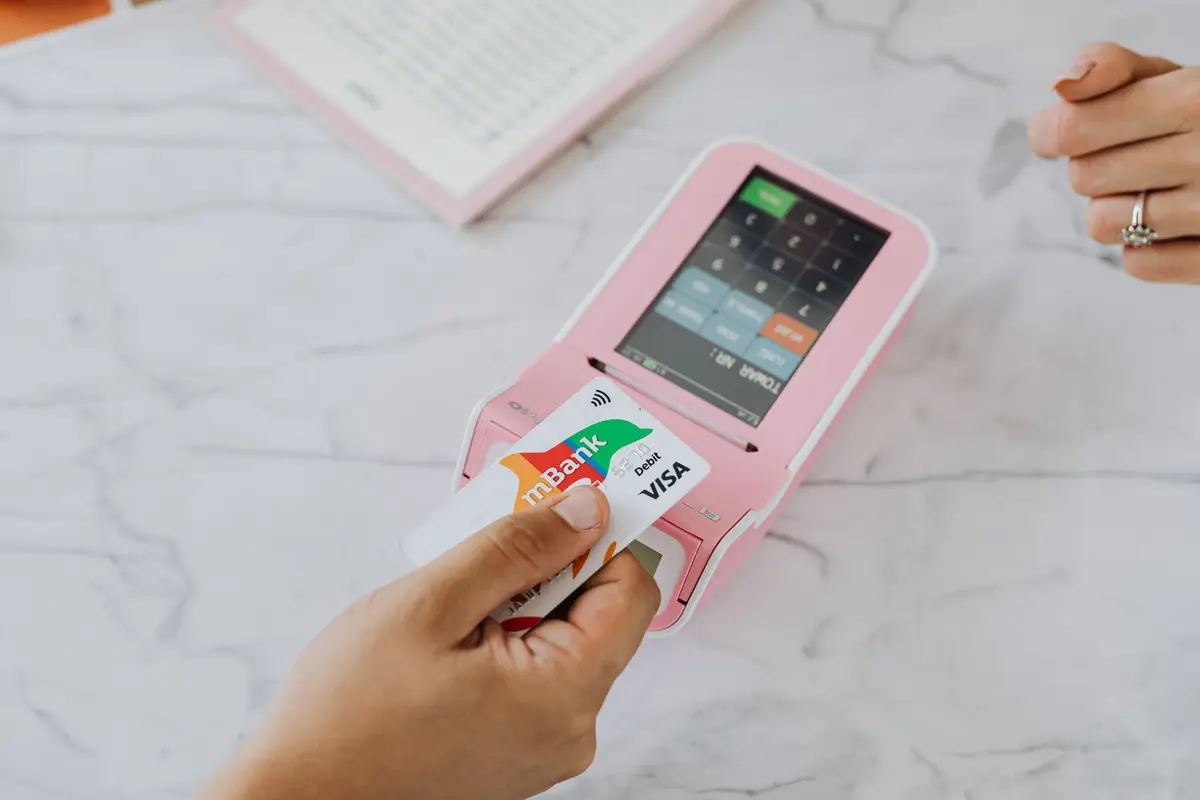
Once the casino has approved a withdrawal, the road splits in two.
A bank-based method (Trustly, bank link, direct bank transfer) sends the money straight to your bank account. Between Estonian banks a payment today moves on the instant-payment principle — seconds to minutes, even at night and at weekends. The background to instant payments is explained in materials from the Estonian Banking Association and Eesti Pank.
A card payment is technically not a transfer but a refund to the original card. It moves from the casino to the payment service provider, from there into the card network and only then to the bank that issued the card. Each link adds its own processing cycle, and the issuing bank credits the amount to your account at its own pace. That is why the published windows for cards are in hours and business days, not minutes.
A card is not a bad choice — it is simply the slower ending. Two situations speak in favour of a card:
If speed matters and both methods are allowed, it pays to make the deposit by bank link straight away — then the withdrawal path is straight too. The differences by method are written up in the Trustly withdrawal guide; the technical side of what exactly happens behind the bank link is in How Trustly works, and the card network comparison in the article Trustly vs Visa/Mastercard.
If a card refund drags on, it is worth comparing it with the casino's own processing time too — the weekend vs weekday comparison shows which side is really stalling.
The difference is not in speed but in the number of parties.
Bank link. Your bank → the casino's payment partner → the casino. Two parties, one authorisation, money moves from account to account. The withdrawal travels the same road back.
Card payment. Your bank → the card issuer → the card scheme (Visa or Mastercard) → the acquiring bank → the casino's payment partner → the casino. Five parties. Each party adds its own check, its own fee and its own time window.
Why this matters for withdrawals. A refund to a card is not a “transfer” but a partial reversal of the original transaction under the card scheme's rules. Technically that is a more complicated operation than a bank transfer, and it is processed on the scheme's schedule, not the bank's.
That is where the whole time difference comes from. A bank link moves under SEPA rules, which are fast. A card payment moves under card scheme rules, which were built for retail, not for fast payouts.
Four places on the card route where time is added.
1. The acquiring bank. The bank of the casino's payment partner processes refunds in batches, usually once a day on business days.
2. The card scheme. Visa and Mastercard process refunds on their own schedule. At scheme level a business day may pass.
3. The card issuer. Your own bank has to credit the refund to the card account. Some banks do it immediately, others with the next billing cycle.
4. The credit card quirk. If it is a credit card, the money does not reach your current account but goes back to your credit limit — and getting it out from there is a separate step many people do not expect.
In total: seconds to one business day with a bank link, typically one to five business days with a card. The difference does not come from one bank being slower than another, but from one road having two parties and the other five.
If the bank link is faster on every measure, a logical question arises.
A card works everywhere. A bank link assumes your bank is integrated with the operator. That is the case for the larger Estonian banks, but with a smaller bank or a foreign account only the card remains.
A card is a habit. Most people pay online by card and do the same at a casino, without considering an alternative.
A card allows credit. That is also why many licensed operators and some countries restrict or ban credit card payments for gambling — playing with borrowed money is a separate risk category.
The practical conclusion. A card payment is a choice of availability, not speed. If a bank link is available, the card has no advantage from a withdrawal point of view — only drawbacks: slower, more parties, and one extra reason for rejection if the name on the card does not match the account name.
One reason for rejection hits card payments more often than bank links, and it is structural.
Most operators require the withdrawal to go to the same method, at least up to the deposit amount. With a card, two extra problems arise here.
The card may have expired. If the deposit was made with a card that has expired or been replaced by the time of the withdrawal, the refund cannot be made and has to be resolved manually.
The name on the card must match. The name on the card and the account name must be the same. With a bank link this is guaranteed automatically, because the identification came from the bank.
With a bank link this problem does not exist. By definition the money goes back to the account it came from, and that account has been identified. A mismatch cannot arise.
This is one concrete, measurable reason why a bank link is the better choice for withdrawals even when both are available — and it is not about speed but about the probability of failure.
Three layers of fees, of which one is visible and two are not.
The casino's withdrawal fee. Visible, written in the terms. Often zero for a certain number of withdrawals per month.
Intermediary fees. A card payment has more parties in the chain and each takes its share. The player usually does not see this because it is the operator's cost — but it shows up indirectly in the terms, for example as a higher minimum withdrawal to a card.
Currency conversion. If the casino account currency and the card currency differ, a conversion happens, and its rate is usually not the best available. With a bank link from a euro account to a euro account, this layer does not exist.
Practical advice. If both are available, the bank link is almost always cheaper — not because of the visible fee but because two invisible layers are missing. For small amounts the difference is largest in percentage terms.
An honest counterweight, because this article is not against card payments.
When a bank link is not offered. Obvious, but it is the most common case.
When your bank is not integrated. With a smaller bank or a foreign account, the card remains the only practical choice.
When you make a one-off small deposit and do not plan a big withdrawal. Then the card payment is a convenience and withdrawal speed is not decisive.
And where a card is definitely the wrong choice: if you plan to withdraw money regularly, if the amounts are larger, or if you want to avoid the risk of a payment method mismatch. In those three cases the bank link is better on every measure.
A practical rule: use what is available, but if both are, choose the bank link.
Four checkpoints that determine your withdrawal experience in advance.
1. Does the operator offer a bank link for your bank? Check the list before registering, not at the moment of deposit.
2. Does the withdrawal go to the same method? Almost always yes, and that means choosing the deposit method is also choosing the withdrawal method.
3. For cards, are refunds supported at all? Some operators do not pay back to cards at all but require a bank transfer, which additionally means proving ownership of the bank account.
4. What is the minimum withdrawal for each method? They differ, and for cards it is often higher.
Four questions whose answers are available in the terms or from customer support, and which together decide whether your first withdrawal takes hours or days.
Bank link: two parties, seconds to one business day, no payment method mismatch can arise, usually no currency conversion, identification comes built in.
Card payment: five parties, one to five business days, an expired or replaced card is an extra risk, conversion possible, with a credit card the money goes back to the limit.
The difference does not come from the bank but from the number of parties and from the fact that a refund to a card is technically a reversal of a transaction, not a transfer.
Practical advice in one sentence: if the operator offers a bank link and your bank is supported, a card payment has no advantage whatsoever for withdrawals. Choose the bank link and this whole article becomes irrelevant to you.
Three pressures, all pushing in the same direction.
Regulatory pressure. In several countries credit card payments for gambling are restricted or banned, because playing with borrowed money is a separate risk category. It does not apply the same way everywhere, but the direction is clear.
Cost pressure. The card chain has five parties and each takes its share. For the operator a bank link is cheaper, and that difference carries over into offers and limits.
Fraud pressure. Card transactions have a chargeback mechanism, which in gambling is a serious risk for the operator. A bank transfer has no such mechanism, which makes it safer from the operator's point of view.
What this means for the player. Card payments remain available, but they are no longer the method operators build their speed promises around. If withdrawal speed is your criterion, the market is moving towards bank links and your choice should move in the same direction.
One feature of card payments that players sometimes see as a solution, and which is not one.
A chargeback is a card scheme mechanism that lets the cardholder dispute a transaction and get the money back. In theory it could be used if the casino does not pay out.
In practice it is a bad idea, for three reasons.
First, it disputes the deposit, not the withdrawal. You are claiming back money for which you received a gaming service — that is not the same thing as an unpaid withdrawal.
Second, it breaches the terms of almost every operator and ends the customer relationship. If you still have a balance on the account, it is lost.
Third, it does not solve the original problem. If the operator does not pay out, the right path is the complaints procedure and, for a licensed operator, the regulator.
When it is justified: an unauthorised transaction, for example if the card was used without your knowledge. That is a fraud case, not a gambling dispute.
The same €500 withdrawal on both roads, with typical values.
Bank link. Casino processing: minutes to one business day. Transfer: seconds by instant payment, or the same/next business day by standard transfer. Fee: usually zero. Conversion: none if both accounts are in euros. Total: same day to one business day.
Card. Casino processing: the same. Acquiring bank: up to one business day. Card scheme: up to one business day. Issuer: up to two business days, plus a billing cycle for a credit card. Fee: usually zero for the player, but conversion is possible. Total: one to five business days.
Difference: typically two to four business days for the same amount at the same casino.
And one asymmetry worth knowing: the deposit is instant on both roads. The difference only arises in the withdrawal direction. That is exactly why most players do not notice it until their first win comes.
A practical situation: the deposit was made by card and now there is a win.
1. Check whether the withdrawal has to go to the card. Most operators require a return to the same method at least up to the deposit amount. The remainder can often go as a bank transfer.
2. Check whether the card is still valid. An expired or replaced card means manual processing and proving ownership of a bank account.
3. If the remainder goes as a bank transfer, prepare proof of account. A statement showing your name and IBAN. That speeds up processing by a day.
4. Next time, use the bank link if it is available. Choosing the deposit method is also choosing the withdrawal method, and it is worth doing consciously, not out of habit.
And one realistic expectation: a refund to a card moves more slowly even when everything is in order. As long as the time stays within one to five business days, it is not a sign of a problem.
For completeness, although most Estonian players use the two above.
E-wallets. A withdrawal to a wallet is usually fast, often faster than to a card. But from the wallet to a bank account is a separate step with its own time and its own fee, so the whole road to the bank account is not necessarily faster than a bank link. In addition, some operators require separate proof of wallet ownership.
Manual bank transfer. The slowest option: you enter the IBAN yourself and the operator verifies ownership. Two manual steps that a bank link does not have.
Crypto. Fast on the network leg, but Estonian-licensed operators practically do not offer it, and with an operator outside the EEA the tax exemption and supervision are lost. Our sister site kryptokasiinod.ee covers this area separately.
Summary: at an Estonian-licensed casino the bank link is the fastest and simplest road. The rest are alternatives for availability, not speed.
If the operator offers a bank link and your bank is supported, a card payment has no advantage whatsoever for withdrawals — only more parties, more time and one extra reason for rejection.
Choosing the deposit method is also choosing the withdrawal method, and that decision is made at the moment you think least about withdrawing — before your first game. Two seconds of attention at that moment saves two to four business days later.
That is the whole article in one sentence, and it is also the only thing to remember from it.
“Withdrawal speed depends on the bank.” Almost never. Estonian banks process SEPA instant payments in seconds and standard transfers within the banking day. The difference between two casinos is many times greater than the difference between two banks.
“A card payment is safer because you can claim it back.” Chargebacks exist, but they dispute the deposit and breach the operator's terms. They do not solve a withdrawal problem. Real safety comes from the licence, not from the payment method.
“A bank link gives the casino access to my account.” It does not. A bank link authorises one specific payment and passes on an identity confirmation. The casino does not see your balance or transaction history and cannot initiate new payments without your confirmation.
The third misconception is the most widespread and the most unfounded — and it keeps some people from using exactly the method that is fastest and cheapest for them.
Three questions whose answers decide.
1. How often do you withdraw money? With frequent withdrawals, the card payment's two-to-four-day gap piles up every time. For a one-off player it is irrelevant.
2. How large are the amounts? For a larger amount, extra parties in the chain are a bigger risk — more places where something can get stuck. For a small amount, the conversion fee is more decisive, if one applies.
3. Is your card stable? If the card expires or is replaced in the coming months, an extra problem arises at the moment of withdrawal. A bank account is usually more permanent.
Three times “frequent, large, unstable” → bank link, definitely. Three times “rare, small, stable” → it makes no difference, choose by convenience.
Most people are somewhere in between, and then the bank link is the better default, because it has no drawback other than availability.
Choosing the deposit method is choosing the withdrawal method, and it is done at the moment people think least about withdrawing.
That is the practical content of the whole article. A card payment is not bad — it was simply built for retail, where money moves in one direction, and in gambling it moves in both. A bank link was built for account-to-account movement and suits both directions equally.
If your operator offers both, the choice is simple and one-off. If it offers only cards, that in itself is information about the operator's payment infrastructure — and in the Estonian market, where the bank link is standard, that is significant.
Three minutes on the deposit page, once per account, and the rest of the article becomes theoretical for you.
Three lines that sum up the practical part of this whole article.
1. See whether a bank link is available for your bank. On the deposit page, before you do anything.
2. If it is, use it — even if a card is more familiar. By the time of withdrawal the choice has already been made and cannot be changed afterwards.
3. If it is not, plan for the card timeline — one to five business days — and check that the card will still be valid in a month.
Three lines, once, and they determine the route of every following withdrawal at that casino.
One place where the difference is measurable and worth checking.
If the casino account is in euros and your bank account is in euros, a bank link involves no conversion. If the casino account is in another currency, conversion happens with a bank link too — and then it is worth checking whose rate is used.
A card payment potentially involves two conversions: from the casino currency to the card currency and, if needed, onwards. Each conversion is a rate plus a margin.
Practical advice: choose the euro as the casino account currency if you have the option. That removes the whole layer at once, and it matters most for smaller amounts, where the percentage is largest.
If a bank link is available, use it. If not, use a card and plan for a one-to-five-business-day timeline for withdrawals.
And if you are choosing an operator and withdrawal speed is your criterion, the availability of a bank link is one of three features worth actively looking for — alongside automatic approval and published limits. Together those three predict your real withdrawal time better than any number promised on a homepage.
Four practical steps that shorten the card timeline as much as possible.
1. Verify your account before the first withdrawal. The card chain is long enough already; a document check on top of it turns it into a week.
2. Check the card's validity. If the card expires in the coming months, manual processing arises at the moment of withdrawal.
3. Ask whether the remainder can go as a bank transfer. Up to the deposit amount it usually has to go to the card, but the rest often does not. That can bring half the amount in faster.
4. Avoid credit cards. The money goes back to the limit, not to the account, and getting it out from there is a separate step.
Four steps will not make a card payment equal to a bank link, but they remove the longest extra delays.
Choosing a payment method is one of the few decisions at a casino that is entirely under your control, free, and has consequences for every subsequent withdrawal. You cannot change the bonus terms, you do not set the limits, you do not directly influence the risk score — but this choice you make yourself, and it lasts for the lifetime of the account.
If you remember one line from this article, let it be this: choose the bank link at the moment of deposit, not at the moment of withdrawal. At the moment of withdrawal the choice has already been made.
If you do not want to read a single page of terms, ask customer support one question: “Does the withdrawal go back to the same method I deposited with, and how long does it usually take?”
The answer covers the choice of method, the timeline and whether the operator even knows its own numbers. A specific answer within a few minutes is a good sign; a vague answer after a few days is also an answer.
Bank link if available. Card if not. Credit card never, if you can avoid it.
From the player's point of view, withdrawals at Estonian-licensed casinos are usually free. The service fee is paid by the casino. If a withdrawal fee is written in the terms, that is the casino's own decision, not the method's.
A refund may appear on the card statement a few days late, and sometimes next to the original transaction rather than as a separate line. Before contacting customer support, check the statement a few days back too.
Reaching the wallet is often fast, but then the money is in the wallet, not in your bank account. If the final destination is your bank account, there is one more step — count the total time, not the first step.
A refund to a card is not a transfer but a partial reversal of the original transaction, which travels through the card scheme. The chain has five parties instead of two, and each adds its own processing window. A bank link moves under SEPA rules, which are fast.
Usually not in full. Most operators require the withdrawal to go to the same method at least up to the deposit amount. So choosing the deposit method is also choosing the withdrawal method.
Back to the credit limit, not to your current account. Getting it out from there is a separate step, and it surprises many people. That is one reason why a credit card is a bad choice for gambling even when the operator allows it.
The bank link, almost always. The visible withdrawal fee may be the same, but a card payment adds two invisible layers: more intermediaries in the chain and possible currency conversion. For smaller amounts the difference is largest in percentage terms.
The ranking shows the main method and the published withdrawal time for each casino.
Compare casinosAffiliate link · 21+