

Editorial pickReSpin4.8/5
Reviewed by our editors
Up to €300 + 100 free spins
Min. deposit 10
View offer
Affiliate link · 21+
The short answer is “no”. The short answer is also incomplete — and it is exactly that incompleteness that costs people money. The tax exemption does not depend on it being gambling, but on who organised the game and under which licence.
Reviewed by our editors
Up to €300 + 100 free spins
Affiliate link · 21+
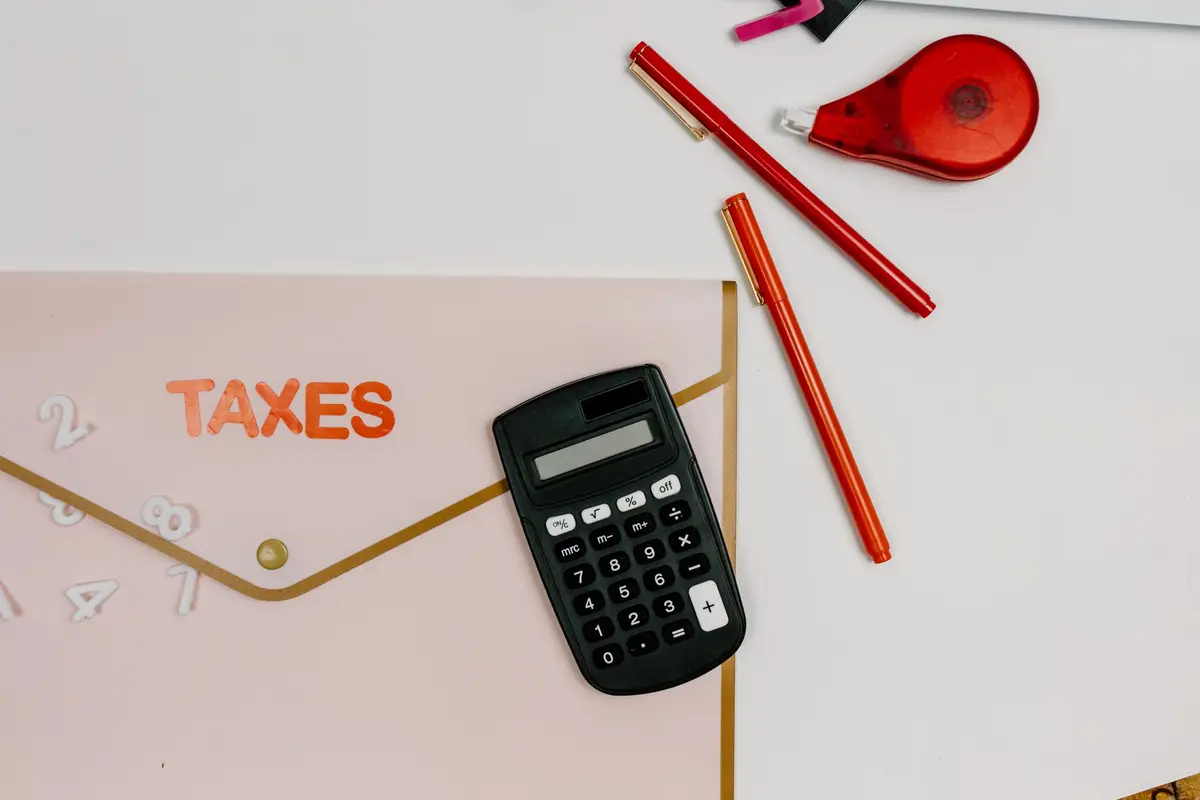
Once the money is finally in your bank account, a question comes up that is rarely asked before the withdrawal: do you have to pay tax on it?
The most common answer on Estonian internet forums is “no, gambling winnings are tax-free in Estonia”. That answer is right about nine times out of ten — and completely wrong the remaining one. The problem is that the difference between them is not visible in your bank account. Same amount, same withdrawal, same feeling. The only difference is who organised the game and under which licence.
That is the core of this whole article, and it is worth saying straight away:
The tax exemption does not come from the fact that these are gambling winnings. It comes from the operator's licence. If the licence exists and comes from the right place, you pay nothing. If it does not, it is ordinary taxable income that you are obliged to declare — and that nobody withholds on your behalf.
In this guide we look at exactly where that line runs, how to check in three seconds which side of it you are on, what declaring means in practice, and what happens when the win is large. We also look at why the casino itself does nothing about your taxes and why movements in your bank account are not a tax report.
One warning before we start: this article is written as of August 2026, and tax law changes. Every figure and rate here should be checked against the Estonian Tax and Customs Board (EMTA) website before you file your income tax return. We are not tax advisers, and in a more complicated situation it is worth asking someone who is.

Before we look at the exceptions, it is worth understanding why this exemption exists at all. It also explains why it does not apply everywhere.
Estonia taxes gambling, but it taxes the operator, not the player. A licensed operator pays gambling tax, at rates tied to its turnover and the type of game. From the state's point of view, the tax has already been collected by the time the money reaches your account.
Two practical things follow from this.
First: you do not have to declare money won at an Estonian-licensed casino anywhere. Not on your income tax return, not in a separate report. This is not “a small amount nobody bothers to ask about” — it is simply tax-free income.
Second: the tax is already built into your RTP. An operator that pays gambling tax factors it into its economics. This is one reason why bonuses and return rates at Estonian-licensed houses are often tighter than at unlicensed foreign ones — their cost base is different. So “tax-free winnings” are not a free lunch; you pay for them with a slightly weaker offer and get supervision and tax certainty in return.
And this is where the logic of the line comes from. If the operator is not under an Estonian or EEA licence, it is not in this tax system. The state has collected nothing from it. So there is no reason to exempt your winnings from tax either — and the law does not.
Who gets a licence in Estonia and what it means is public information. The list of valid operators is kept by the Estonian Tax and Customs Board (EMTA) in the register of legal gambling operators, and the whole framework comes from the Gambling Act. On the income tax side, it is governed by the Income Tax Act, whose current wording is worth reading before you declare.
In practice there are three situations. The difference between them is clear once you know what to look at.
Who they are. All houses that advertise openly in Estonia and have an Estonian registry code and a reference to the Estonian Tax and Customs Board (EMTA) licence in their footer. The operators in our comparison mostly belong to this group — OlyBet, Optibet, Coolbet, Paf, Unibet, Betsafe, Ninja Casino and others.
Tax position. The winnings are exempt from income tax. You declare nothing. The tax is the operator's, and it has already been paid.
How to check. The EMTA register. Search for the operator's legal name — not the brand name, because one company can run several brands. The name is in the casino's footer or terms and conditions.
Who they are. Operators holding a gambling licence in another European Economic Area country — for example a house licensed in Malta, Sweden, Denmark or Latvia.
Tax position. The exemption applies here too. The law does not require the licence to be specifically Estonian — it requires it to be from Estonia or an EEA contracting state.
Where the catch is. Two things. First: an EEA licence does not mean the operator may market in Estonia — that is a separate question, and advertising in Estonia requires an Estonian licence. Second, and more importantly: the licence has to be a gambling licence, not just any business registry entry. A Maltese company with a Curaçao gambling licence is not an operator with an EEA gambling licence, even though its address is in the EEA. This exact confusion is the most common mistake.
Who they are. Houses licensed in Curaçao, Anjouan and similar jurisdictions. In practice, most crypto casinos and a large share of the “international” brands that accept Estonian players are concentrated in this group.
Tax position. The winnings do not count as tax-free gambling winnings. This is taxable income that must be declared and on which income tax must be paid at the current rate — 22% from 2025.
Who withholds it. Nobody. A non-EEA operator is not an Estonian tax agent and withholds nothing on your behalf. The entire obligation to declare is yours, and it arises automatically, whether or not anyone asks about it.
The tax side of crypto casinos is separate and even more layered, because there is also the question of disposing of crypto-assets — it is covered in detail in the article are crypto winnings taxed in Estonia, and the concept itself in the crypto taxation glossary entry.
| Estonian activity licence (EMTA register) | Tulumaksuvaba · deklareerida ei ole vaja · maks on korraldajal |
|---|---|
| Gambling licence from another EEA country | Tulumaksuvaba · deklareerida ei ole vaja · luba peab olema hasartmänguluba |
| Curaçao, Anjouan or other non-EEA licence | Maksustatav tulu · deklareerimiskohustus sinul · 22% kehtiva määraga |
| No licence at all | Maksustatav tulu · lisaks puudub igasugune vaidluste lahendamise tee |
| Company registered in the EEA, non-EEA gaming licence | Maksustatav — loeb mänguluba, mitte äriaadress. Levinuim eksitus |
| Who withholds the tax | Mitte keegi · välismaine operaator ei ole Eesti maksuagent |
| Who declares | Sina, tuludeklaratsioonil järgmise aasta kevadel |
| Where to check | MTA seaduslike korraldajate register + operaatori jaluse litsentsiviide |
This is the most practical part of the article. Three steps that give you a definite answer.
Step 1 — find the operator's legal name and licence number. These are almost always in the casino's footer, in the smallest print. Look for a sentence like “X OÜ, registry code …, activity licence no …” or “operated by Y Ltd, licence no …”.
If you cannot find any licence information in the footer, that is an answer in itself. A licensed operator displays it, because it has to.
Step 2 — look at WHO issued the licence, not where the company is based. This is where most people go wrong. Read the licence line to the end:
A company address in Malta means nothing if the licence is from Curaçao. The same goes for Cyprus, Estonia or any other registry code. Only the gaming licence counts.
Step 3 — double-check in the EMTA register. If an Estonian licence is claimed, look the company up in the register of legal gambling operators. The register is public and the search takes seconds. If the company is not there, there is no Estonian licence, whatever the footer claims.
“The site is in Estonian, so it has an Estonian licence.” That does not follow. The language version is a marketing decision. An unlicensed operator can offer perfect Estonian, a euro account and Estonian customer service without any licence at all.
“They accept bank-link payments, so they must be checked.” That does not follow. A payment service provider's licence and a gambling licence are two different things, issued by two different authorities on two different grounds. How these payment rails really work and who is responsible for what is explained in the pangakasiinod.ee guide to how Trustly works.
Suppose you have landed in case C. What now?
What the taxable amount is. What is taxed is the winnings, not the net profit. This is the part that feels unfair and that is worth knowing precisely: the Estonian income tax system does not allow a private individual to deduct gambling losses from winnings. You do not declare “over the year I was 300 euros up” — it is the winnings that must be declared.
In practice this means a tax liability can arise even if you are down over the year as a whole. This is the single most important fact in this section, and also the strongest argument that playing at unlicensed houses is more expensive than it first appears.
When to declare. On your income tax return the following spring, in the usual filing period.
How much. The current income tax rate, 22% from 2025. Check the rate on the EMTA website before filing — it has changed in recent years and may change again.
Sample calculation. Winnings at a non-EEA casino: 2,000 euros. Income tax at 22% = 440 euros. This liability arises regardless of whether you withdrew the money or kept playing and lost it later.
If you play or have played at a non-EEA house, documentation is the only thing that makes later declaring possible at all. Three things:
1. An account statement from the casino. Most houses let you download your transaction history. Do it as you go, not a year later — the account may be closed, the house may have shut down, and then there is nowhere to get it from.
2. A bank statement. The incoming payments are your evidence, and they remain even when the casino does not.
3. A screenshot of the licence information. If you ever need to prove which licence the house operated under, a dated screenshot of the footer is worth more than a memory.
One practical tip. If the situation is large or messy — several houses, several years, crypto in between — this article is not enough. Ask a tax adviser or contact EMTA directly. Their binding preliminary ruling costs less than correcting a wrong return later.
If the player does not pay, someone does. It is worth knowing who and how much, because that number explains quite a lot of what you see at a casino.
Who pays. The operator with an Estonian activity licence. The tax must be paid regardless of whether the house made a profit or a loss that month, and regardless of how much an individual player won or lost.
On what. The tax base depends on the type of game. For games of chance, the base is the difference between bets placed and winnings paid out — essentially the house's actual revenue. For games based on an entry fee, such as tournament poker, the base is different. The exact rates and bases are in the Gambling Act and related tax laws, and they change from time to time — the current figures are on the Estonian Tax and Customs Board (EMTA) website.
Why it matters to you. Three practical consequences.
1. Your tax exemption has already been “paid”. The state does not give up tax revenue — it collects it from the other side. That is why the exemption is conditional: if nothing has been collected from the operator, there is no reason to exempt the player. The whole logic of cases A, B and C comes from this one thing.
2. The tax is inside the return rates. A licensed operator's cost base includes the tax, the licence fee, supervision requirements and mandatory responsible gambling systems. An unlicensed operator's does not. That accounts for much of the difference players notice when comparing bonus generosity and return percentages — and that makes them ask why a foreign house “offers more”.
3. It is why a licence is a serious matter commercially, too. An activity licence comes with reporting obligations, supervision and a tax burden. An operator that takes one has made an investment it does not want to lose — and that is indirectly your protection. An unlicensed house risks nothing but its domain name.
What exactly an Estonian activity licence means from the player's point of view and what the operator promises in return is explained in detail in the pangakasiinod.ee article on the Estonian gambling licence. Our catalogue of checked houses is under freespin.ee Estonian-licensed casinos.
A question that logically arises: if Estonia collects tax from Estonian operators, why are winnings from a house licensed in Malta or Sweden also tax-free? Estonia collects nothing from a Maltese operator, after all.
The answer is not about tax policy but comes from European law.
The free movement of services is one of the fundamental principles of the European Union. The Court of Justice of the EU has repeatedly found that if a member state exempts winnings from gambling organised in its own country but taxes winnings from games organised in other member states, this is a restriction on the free movement of services. The best-known ruling in this area concerned the Finnish taxation rules and a lottery win organised in Sweden — the court found that such a distinction is not permitted.
As a result, member states have had to extend their tax exemptions to cover operators licensed in other EEA countries as well. The Estonian rule is exactly that: the exemption is tied to a gambling licence from Estonia or an EEA contracting state.
Three practical conclusions from this.
One: the EEA boundary is not arbitrary. It is not a list of “our friends” but a legally defined area. Curaçao and Anjouan are not in the EEA for geographical and legal reasons, not political ones, and so the exemption does not reach them even if the licence itself were strict.
Two: the EEA licence has to be a gambling licence. Case law talks about a licence to organise games, not the company's location. A Maltese company organising games under a Curaçao licence does not fall under the exemption — its gaming licence is not from the EEA.
Three: even a house with an EEA licence may not automatically advertise in Estonia. The tax exemption and the right to market are different things. A house can be tax-free for you and still operate in breach of Estonian advertising rules. That does not change your tax position, but it says something about how careful the operator is in general.
Where to check it. EEA gambling licences are public in the registers of each country's supervisory authority — for Malta, for example, they are kept by the Malta Gaming Authority. If the footer claims a Maltese licence, checking the licence number there is as easy as checking an Estonian one in the EMTA register.
Most situations are simple, but some regularly raise questions. Let us go through them.
Tournament winnings and leaderboard prizes. If they come from a gambling operator as part of the game, they share the tax position of winnings: tax-free at a house with an Estonian or EEA licence, taxable elsewhere. How tournament scoring works does not affect the tax position at all.
Non-cash prizes. A car, a trip, electronics. Tax law looks at the prize's market value here. With an Estonian-licensed operator, the same exemption applies as for cash winnings. With a non-EEA operator, it is taxable income whose value has to be assessed — and that is exactly the situation where it pays to ask a tax adviser, not a forum.
Cashback and refunded losses. This is not winnings but part of the game mechanics. The tax position follows the same logic as everything else: the operator's licence decides.
No-deposit bonus. The same. The bonus itself is not income; money earned with it and paid out shares the fate of other winnings.
Streaming, affiliate and “referral” income. This is not gambling winnings. If you get money from a casino for sending players there or creating content, it is payment for a service, and it is taxable regardless of where the operator is licensed. This is confused with winnings surprisingly often, and it is an entirely separate tax question.
Playing from someone else's account. Not a tax question but a breach of the terms, which usually ends with the account being closed and the withdrawal refused. Why the account has to be in your own name and what is checked during verification is in the KYC documents article.
If you live abroad or move. Tax liability follows tax residency, not citizenship or where the casino is located. If you are no longer an Estonian tax resident, Estonian rules do not apply, and those of the country where you are resident do. This is where generalisations stop working entirely — if you move, ask the tax authorities of both countries.
And one thing that is not a tax question but is often asked here. If you have set yourself a HAMPI restriction or self-exclusion, it changes nothing about the tax position of winnings you have already received. A restriction is forward-looking protection, not a retroactive transaction.
Here are a number of things players confuse with this topic. Let us go through them, because each one causes needless worry.
A withdrawal check is not a tax check. If the casino asks for documents or the source of funds before a withdrawal, that is an anti-money laundering procedure, not the tax authority. Two different laws, two different purposes, two different authorities. What exactly is asked for and why is set out in the KYC and withdrawals guide and the documents article.
The bank is not the tax authority. The bank sees the incoming payment and has its own reporting obligations under anti-money laundering rules. That is not a tax report or tax accounting. Your obligation to declare is your own and does not depend on what the bank does.
A large withdrawal is not a tax event in itself. If the winnings came from an Estonian-licensed house, they do not become taxable because they are large. A large amount triggers checks — that is true, and it is explained in the withdrawal limits sample calculation — but a check is not a tax.
Bonus money is not a separate tax event. Bonuses, free spins and cashback are part of the game, not separate income. Their tax position follows the same rule: the operator's licence decides.
Withdrawal speed has no effect whatsoever on taxation. This may sound obvious, but the question really does come up: players sometimes think a fast withdrawal or one made in instalments changes something. It does not. The tax position is fixed at the moment of winning, not the moment of withdrawal. How long a withdrawal actually takes and what it depends on is in our withdrawal times comparison.
And one warning the other way. If you leave winnings from a non-EEA house undeclared, it does not “expire” automatically. The tax liability has its own deadlines and later correction is possible — a corrected return is almost always better than one never filed.
You might ask why a tax article is on a site that measures withdrawal speed. The answer is that the two are two sides of the same decision.
When you choose where to play, you usually look at three things: the bonus, the game selection and the withdrawal speed. Non-EEA houses often win on the first two and frequently on the third as well — a crypto withdrawal can arrive within minutes, faster than any bank transfer. See, for example, how fast crypto casino withdrawals are.
But that speed is a price, not a gift. Three things you trade away:
1. The tax exemption. 22% of your winnings is a bigger number than any bonus difference.
2. The route for resolving disputes. With an Estonian-licensed house there is a complaints procedure, supervision and deadlines. With a non-EEA house there is only the house itself. If the withdrawal does not arrive, there is nobody in Estonia to turn to — this is explained in the article withdrawal rejected.
3. Responsible gambling tools. The HAMPI register, mandatory limits and the duty to intervene apply only to Estonian-licensed operators. How HAMPI works and how a restriction ends is in the article removing a gambling ban, and setting limits is covered on the responsible gambling page.
The practical conclusion. This is not a call never to play at a non-EEA house — that is an adult's decision, and the information is here so you can make it knowingly. It is a call to know which side you are on before the win comes. Because afterwards, the only question left is whether you know how to declare it.
If the tax exemption and supervision matter to you, the choice is simple: Estonian-licensed houses, which our withdrawal times table measures and whose methodology is on the methodology page. Houses using bank transfer are covered in depth on pangakasiinod.ee, and the wider casino catalogue is at freespin.ee.
It is a fair question and deserves real numbers, not an attitude. Non-EEA houses typically offer more generous bonuses and higher returns. Does that cover 22%?
Setup. Take a player who wagers 5,000 euros of turnover over a year and whose result is typical — slightly down, but with some wins along the way. Suppose that over the year a total of 3,000 euros in winnings have been paid out (this does not mean 3,000 euros of profit; it is the sum of the winnings).
Option 1 — an Estonian-licensed house. Return rates are more modest, bonuses tighter. Suppose loyalty and promotions give a total of 60 euros of value over the year. No tax. The net result on the winnings side: 3,000 euros tax-free, plus 60 euros of perks.
Option 2 — a non-EEA house. Bonuses are more generous, there is rakeback. Let us realistically assume an offer twice as good: 120 euros over the year. But the winnings are taxable: 3,000 × 22% = 660 euros of income tax.
The difference. Option 2 gives 60 euros more in perks and costs 660 euros more in tax. The net difference is roughly 600 euros in favour of option 1 — and this applies to a player who was probably down by the end of the year.
What this calculation shows and what it does not. It does not show that Estonian houses are always the better choice — if you play rarely and small, both numbers are small and the difference is not decisive. It shows that comparing bonuses without the tax component is meaningless when the houses have different tax positions. A 20 percent bonus difference does not make up for a 22 percent tax on winnings, because the two are calculated on different bases: the bonus on your deposit, the tax on your winnings.
And one asymmetry that makes it even clearer. If you are lucky and win a lot, the tax burden grows proportionally — but the bonus stays the same, because it is tied to the deposit. In other words: the better you do, the worse the non-EEA house's deal becomes. That is the opposite of what most people assume.
If speed is why you are considering a foreign house, it is worth first looking at how fast Estonian-licensed houses actually are — the gap is no longer what it was a couple of years ago. Our measured figures are in the withdrawal speed overview and the Pay N Play share analysis, and by method on the Trustly and Pay N Play pages.
If the amount is significantly larger than usual, here is an order that prevents both tax and withdrawal problems.
Step 1 — before you do anything, take a screenshot. The winning screen, the account balance, the game history and the licence information in the casino's footer. It takes thirty seconds and is irreplaceable later.
Step 2 — check which case the house belongs to. The three-step method is above. Do it now, not at declaration time — the footer may change, the house may switch licences.
Step 3 — review the withdrawal limits. A big win may exceed the monthly limit, which means being paid out in instalments over several months. What that looks like in practice is in the sample calculation with three scenarios, and the general picture is on the withdrawal limits page.
Step 4 — make sure verification is done. A large amount almost always triggers a check. If your documents are already in order, most of the waiting disappears. See KYC check and withdrawal.
Step 5 — finish all bonuses before the request. An active wagering requirement locks the balance. The calculation is in the pangakasiinod.ee guide, and the concept itself in the freespin.ee glossary.
Step 6 — submit the request and do not cancel it. Why reversing is a bad idea is covered in a separate article: withdrawal reversal.
Step 7 — save the transaction history. Even if the win was tax-free. If a question comes up a year later, the statement is there.
Step 8 — if it is case C, set money aside straight away. 22% of the winnings into a separate account on the same day. By spring the amount is already there and declaring is a formality, not a surprise.
Why in this order. Steps 1–2 are irreversible in terms of information: licence information and screenshots disappear if the house changes something or the account is closed. Steps 3–6 decide how fast the money moves, and they can only be done before the request. Steps 7–8 are for the future. The most common mistake is to start with step 6 — submitting the request immediately — and only then discover that a bonus was still in progress or the documents had not been done. The five things that cause players the most delay are summed up in a separate article.
Myth 1: “Below a certain amount you do not have to declare.” For a private individual there is no tax-free threshold for gambling winnings that would allow taxable winnings to go undeclared. The confusion probably comes from the fact that winnings from Estonian-licensed houses are fully tax-free — so most people never declare anything and infer the wrong rule from that.
Myth 2: “If I don't withdraw the money, it isn't income.” The tax position is fixed at the moment of winning, not the moment of withdrawal. If the winnings came from a non-EEA house, the liability arises when you won — even if you left the money in the account and lost it later. That is uncomfortable, and it is also why, with a taxable house, it makes sense to withdraw winnings right away rather than “keep them in the gaming account”.
Myth 3: “The casino is in Malta, so it's EEA.” A business registry address and a gambling licence are two different things. A Maltese company can organise games under a Curaçao licence, and then it is not an operator with an EEA gambling licence. Always read the licence line to the end: what counts is who issued the licence.
Myth 4: “If the casino accepts euros and speaks Estonian, it is regulated in Estonia.” Neither follows. The currency is a technical choice and the language is a marketing decision. The only proof is the licence reference and checking it in the register.
And one thing that is not a myth but is worth clarifying. The tax exemption does not mean that playing at an Estonian-licensed house is profitable. The house edge applies equally everywhere, and over the long run the player's expected result is negative regardless of the licence. The tax exemption simply means you do not pay tax on winnings that preceded the loss on top of the loss. If gambling has stopped being entertainment, help is free and anonymous: the 15410 helpline, the National Institute for Health Development and peaasi.ee. Self-tests for yourself and for someone close to you are at the freespin.ee self-test and on the page for loved ones.
No. Winnings from an operator holding an Estonian gambling activity licence are exempt from income tax for a private individual and are not declared. The tax liability lies with the operator, who pays gambling tax, and it has been paid before the money reaches your account. The same applies to winnings received under a gambling licence from another European Economic Area country.
Look at the casino's footer: it must show the legal name and the licence issuer. What counts is WHO issued the licence, not where the company is registered. The Estonian Tax and Customs Board (EMTA) or an EEA country's gambling regulator means a tax exemption; Curaçao or Anjouan does not. An Estonian licence can be double-checked in EMTA's public register of legal gambling operators.
Curaçao is not in the European Economic Area, so the exemption for tax-free gambling winnings does not apply. The winnings are taxable income that you must declare on the following year's income tax return, and income tax at the current rate is 22% from 2025. The operator withholds nothing and reports to nobody — the obligation arises automatically.
Not as a private individual. Winnings are taxed, not net profit. This means a tax liability can arise even if you are down over the year as a whole. It is one of the strongest practical arguments that playing at unlicensed houses is more expensive than it first appears.
With an Estonian-licensed house there is nothing to withhold — the winnings are tax-free. With a non-EEA operator nobody withholds anything either, because it is not an Estonian tax agent. All the declaring is the player's obligation. The fact that nobody told you anything does not mean there is no obligation.
The bank is not the tax authority. The bank has its own reporting obligations under anti-money laundering rules, but those come from a separate law and serve a separate purpose. A bank statement is not tax accounting, and seeing an incoming payment is not a tax report. Your obligation to declare is your own and does not depend on what the bank does.
No. Bonus money, free spins and cashback are part of the game, not a separate type of income. Their tax position follows the same rule as other winnings: the operator's licence decides. Tax-free at a house with an Estonian or EEA licence; part of the taxable winnings at a non-EEA house.
Because it is not a tax question. A source-of-funds request comes from the anti-money laundering law, which banks and notaries also apply. Two different laws, two different purposes. The request is usually triggered automatically when a threshold is crossed and does not mean there is anything suspicious about your tax position.
A return can be corrected, and a corrected return is almost always better than one never filed. A tax liability does not disappear automatically with time. If the amounts are large or the situation is messy — several houses, several years, crypto in between — it is worth going to a tax adviser or asking the Estonian Tax and Customs Board (EMTA) directly.
There are two layers at once. First, the winnings themselves, whose tax position is decided by the operator's licence as everywhere else — and for crypto casinos it is typically non-EEA. Second, the disposal of crypto-assets: if you later exchange the crypto you won for euros, the exchange-rate difference is a separate tax event. Both layers are covered in a separate article on kryptokasiinod.ee.
Because it comes from European law, not Estonian tax policy. The principle of free movement of services does not allow a member state to exempt gambling winnings from its own country while taxing those from other member states. The Court of Justice of the EU has confirmed this repeatedly, which is why the Estonian exemption is tied to a gambling licence from Estonia or an EEA contracting state, not only an Estonian one.
Typically not, because the two are calculated on different bases: the bonus on your deposit, the tax on your winnings. A 20 percent bonus difference does not cover a 22 percent tax on winnings. An asymmetry makes it even clearer: the more you win, the larger the tax grows, while the bonus stays tied to the deposit and does not grow with it.
It depends on the same rule as cash winnings: the operator's licence decides. With an operator licensed in Estonia or the EEA, the exemption also applies to non-cash prizes. With a non-EEA operator, it is taxable income based on the prize's market value. Assessing that is exactly the situation where it pays to ask a tax adviser.
No. If you get money from a casino for sending players there, creating content or providing another service, it is payment for a service. It is taxable income regardless of where the operator is licensed, and the gambling winnings exemption does not extend to it. The two are confused surprisingly often.
Tax liability follows tax residency, not citizenship or the casino's location. If you are no longer an Estonian tax resident, Estonian rules do not apply, but those of the country where you are resident do — and they may treat gambling winnings quite differently. If you move, ask the tax authorities of both countries, because generalisations do not work here.
Three sentences that cover the whole topic.
One: the tax exemption comes from the operator's licence, not the type of game. An Estonian activity licence or a gambling licence from another EEA country means tax-free winnings and zero declaring. Everything else means taxable income.
Two: checking takes three minutes, and it has to be done before, not after. Look in the footer at who issued the licence — not where the company is based — and check an Estonian licence in the EMTA register. An Estonian-language site and bank-link payments prove nothing at all.
Three: if you are in case C, set 22% aside straight away. Declaring in spring is a formality if the money is there, and an unpleasant surprise if it is not. And remember that losses cannot be deducted — winnings are taxed, not the annual result.
Everything else — withdrawal speed, limits, KYC, bonuses — is the technical follow-up to this decision. We measure that technical part every day, and our methods are described on the methodology page. Who we are is on about us, and you can write to us with questions via the contact page. Our advertising principles are on the advertising disclosure page.